

James Rollins Sigma Force Books in Order (2026)
- Vinit Nair
- Jun 10
- 8 min read


James Rollins' Sigma Force series is one of the most underrated thriller franchises running. Part military action, part historical mystery, part bleeding-edge science. Imagine Indiana Jones with a PhD in physics, working for DARPA.
With 18 novels in the main Sigma Force series, plus a handful of novellas, several standalone thrillers, and a spin-off fantasy saga, the reading order matters. Characters evolve, relationships carry between books, and major events in later novels reference earlier ones.
I've listened to most of the series on audiobook, some of them more than once, and I keep coming back. Here's the complete reading order and everything you need to know about where to start.
The Quick Version
Do you have to read Sigma Force in order? Not strictly, since each novel tells a self-contained story. But the series runs on an overarching narrative with recurring characters and relationships that build over time. For the full payoff, read in publication order, and start with Sandstorm.
If you just want a taste before committing to 18 books, try Map of Bones (book two). It is the most accessible entry point, and it works as a standalone.
Sigma Force Books in Order (Complete List)
Sandstorm (2004)
Map of Bones (2005)
Black Order (2006)
The Judas Strain (2007)
The Last Oracle (2008)
The Doomsday Key (2009)
The Devil Colony (2011)
Bloodline (2012)
The Eye of God (2013)
The 6th Extinction (2014)
The Bone Labyrinth (2015)
The Seventh Plague (2016)
The Demon Crown (2017)
Crucible (2019)
The Last Odyssey (2020)
Kingdom of Bones (2022)
Tides of Fire (2023)
Arkangel (2024)
Every Sigma Force Book in Order
The Foundation (Books 1–4)
These establish Sigma Force, a covert team of ex-Special Forces operatives retrained in scientific disciplines. Their mission: investigate scientific and historical threats.

1. Sandstorm (2004). A freak explosion tears through a London museum gallery, and the clues point straight to Ubar, the legendary "Atlantis of the Sands" swallowed by the Arabian desert. This is the origin story, where you meet Painter Crowe, the Sigma operative at the heart of it, plus the core conceit of soldiers retrained as scientists. The antimatter mystery is unsettling in a way that lingers, and it lays down the template the whole series runs on.

2. Map of Bones (2005). Masked killers slaughter a congregation inside Cologne Cathedral and steal the bones of the Three Magi, sending Sigma racing the secretive Dragon Court across Europe. It is the most "Dan Brown but better" entry, threading real history, the Vatican, and a lost form of energy hidden inside sacred relics. This is the book that hooks most people, and it is the one I hand to anyone curious about the series.

3. Black Order (2006). A deadly auction in Copenhagen pulls Sigma toward a surviving Nazi science cult and the Bell, a WWII experiment in forced, accelerated evolution. The chase splits between a remote monastery in Nepal, where the monks descend into murderous madness, and the wilds of South Africa. It is darker and stranger than the first two, with body horror that creeps up on you.

4. The Judas Strain (2007). A cruise ship turns into a floating petri dish when an ancient bacterium reawakens, and the cure is buried in the secret of Marco Polo's doomed final voyage. Half the team fights the outbreak at sea while the other half decodes a centuries-old plague map across Cambodia. I held my breath through most of the outbreak chapters at sea.
The Expansion (Books 5–8)
The cast deepens, the science gets bigger, and the global stakes escalate.
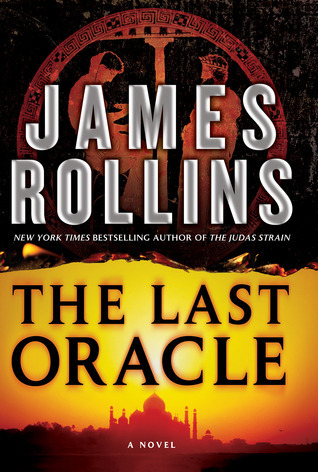
5. The Last Oracle (2008). A dying man presses a coin into Gray's hand on a Washington street, cracking open a conspiracy that links autistic savants, the Oracle of Delphi, and Cold War psychic experiments. Gray follows it from the ruins of Chernobyl all the way to ancient Greece, with weaponized children caught in the middle. The team starts to feel like a real family here, which makes the danger land harder.

6. The Doomsday Key (2009). This is the entry whose premise unsettles me most, because it feels like it could actually happen. Three people die on three continents on the same day, each branded with a pagan cross, tying a modern famine plot to the Domesday Book of William the Conqueror. The search for an engineered blight drops Sigma into the catacombs of Rome before stranding them at a frozen Arctic seed vault.

7. The Devil Colony (2011). A cache of mummified bodies in a Utah cave triggers a catastrophe that could rewrite the story of America's founding, tangling a lost native tribe, the Founding Fathers, and self-replicating nanotech. The threat eventually points straight at the Yellowstone supervolcano, which is exactly as bad as it sounds.

8. Bloodline (2012). When the President's pregnant daughter is taken by Somali pirates, the rescue uncovers the Guild's real endgame, immortality hidden inside human DNA. It is the most personal entry yet, paying off threads that have been building since book one. Expect betrayals that sting, plus the full-novel debut of Tucker Wayne and his war dog Kane.
The Peak (Books 9–14)

9. The Eye of God (2013). A research satellite beams back a photo of a future where the eastern seaboard is a smoking ruin, and the only lead traces to the lost tomb of Genghis Khan. Sigma has barely four days to stop a comet of dark matter from rewriting reality itself. It is big, cosmic, time-bending Rollins, and I broke down the science-versus-faith tightrope in my full review.

10. The 6th Extinction (2014). A military research station in California dies in minutes, the land around it left sterile, and the cause is a shadow-biosphere of organisms that should not exist. From those sealed underground caves to the ice of Antarctica, extinct life gets dug up and weaponized. I dug into how Rollins balances the runaway science against the human cost in my review.

11. The Bone Labyrinth (2015). A hyper-intelligent gorilla, a buried prehistoric chapel, and one big mystery about what triggered the sudden leap in human intelligence tens of thousands of years ago. It jumps from a Croatian cave system to a Chinese space program, with rival superpowers racing to weaponize the answer. The action barely pauses once the gorilla subplot kicks in.

12. The Seventh Plague (2016). The leader of a lost expedition staggers out of the Sudanese desert half-mummified and still barely alive, carrying a pathogen that recreates the biblical plagues of Egypt. Sigma traces it back to a discovery made by a Victorian explorer and a threat that could collapse the modern world. The plagues-of-Egypt parallels get under your skin once they start landing.

13. The Demon Crown (2017). A swarm of prehistoric, wasp-like predators is unleashed from a remote Pacific island, threatening to devour the food chain itself. The outbreak traces back to a buried secret kept by James Smithson, the man whose fortune founded the Smithsonian. It leans hard into ecological horror, with a countdown that keeps tightening.

14. Crucible (2019). Seichan and others are abducted, and the kidnapping is bound up with a newborn artificial intelligence, the witch-hunting manual of the Spanish Inquisition, and the question of what a true digital god would want. It is the most genre-bending book in the series, fusing techno-thriller with occult history. The personal stakes for Gray run sky-high throughout.
The Recent Entries (Books 15–18)

15. The Last Odyssey (2020). A medieval ship is found frozen inside a Greenland glacier, packed with clockwork automatons and a map hinting that Homer's Odyssey chronicled real places. That sends Sigma chasing a mythic underworld and a doomsday weapon left behind by an ancient genius. The Homer-as-history angle alone makes this one worth the read.

16. Kingdom of Bones (2022). Deep in the Congo, something is turning the jungle itself hostile, accelerating life and death in ways that defy biology. As villages fall, Sigma races to understand a primal force that could reset evolution. The setting itself turns into the villain, and that idea stuck with me longer than the plot did.

17. Tides of Fire (2023). A chain of volcanic and seismic disasters threatens to crack open the Pacific, and the cause lies in something ancient sleeping beneath the seafloor. Sigma works the catastrophe from deep-sea labs and contested waters where global powers are already circling. Those underwater sequences gave me the same boxed-in dread the best submarine thrillers do.

18. Arkangel (2024). The murder of a Vatican archivist cracks open a conspiracy reaching back to the era of the Russian Tsars, a lost Golden Library, and the myth of the frozen northern continent of Hyperborea. Tucker Wayne and his war dog Kane return, the threat turns personal for the team, and Rollins has framed it as a major turning point for Sigma. The newest chapter, and a strong jumping-on point for the modern run.
A note on The Cradle of Ice (2023): some aggregator lists file it under Sigma Force, but it is not a Sigma novel. It is Book 2 of the Moonfall Saga, Rollins' epic fantasy series. The Moonfall reading order is below.
Sigma Force Short Stories and Novellas
The main novels stand on their own, but Rollins has written several shorter pieces set between them. They focus on solo missions and character backstory, so they are optional, though completists will want them in this order.
Kowalski's in Love (2006, between books 2 and 3). A standalone outing for the team's wisecracking muscle, Joe Kowalski.
The Skeleton Key (2011, between books 6 and 7). A Commander Gray Pierce short set beneath the streets of Paris.
Tracker (2012, between books 7 and 8). Introduces Tucker Wayne and his military war dog Kane, who go on to become fan favorites.
The Devil's Bones (2014, between books 9 and 10). A crossover short from the FaceOff anthology, co-written with Steve Berry, that pits Gray Pierce against Berry's Cotton Malone. More of a fun one-off than core canon.
The Midnight Watch (2015, between books 10 and 11). A Tucker and Kane adventure.
Crash and Burn (2016, between books 11 and 12). Another Tucker and Kane short.
Ghost Ship (2017, between books 12 and 13). A Tucker and Kane mystery at sea.
The Moonfall Saga (Separate Series)
Rollins also writes an epic fantasy series under the same name. It is a four-book saga.
The Starless Crown (2022)
The Cradle of Ice (2023)
A Dragon of Black Glass (2025)
A Fist of Molten Fire (December 2026), the final book in the saga
These are completely separate from Sigma Force. Fantasy readers who enjoy Rollins' worldbuilding should check them out.
Standalone Thrillers
Rollins has several standalones that don't require any Sigma Force knowledge.
Subterranean (1999). His debut. A cave system in Antarctica, pulpy and fun, and it shows Rollins' DNA from the start.
Excavation (2000). An archaeological dig in Peru goes wrong. Classic adventure-thriller territory.
Deep Fathom (2001). Underwater ruins, conspiracy, and natural disaster. Aquatic Rollins.
Amazonia (2002). An expedition into the Amazon, with creatures, lost civilizations, and survival horror.
Ice Hunt (2003). A buried WWII research station in the Arctic. The most Crichton-esque standalone.
Altar of Eden (2009). Smuggled, lab-altered animals with eerily heightened intelligence surface in the Louisiana bayou, and the trail leads back to a ransacked lab in war-torn Baghdad. A creature-feature thriller with Rollins' science-gone-wrong DNA.
He also published a new standalone, Trust No One, in February 2026, where an American postgraduate student at Exeter, falsely accused of her professor's ritualistic murder, must decode the encrypted diary of an 18th-century alchemist, the Comte de Saint-Germain, whose secrets could change humankind forever.
Can You Read Sigma Force Out of Order?
Technically, yes. Each book has a self-contained plot. But character arcs (Gray and Seichan's relationship, Painter's evolution as director, Monk's journey) carry through the series, and reading out of order means spoiling major personal events. I'd recommend starting from the beginning.
If you must jump in, Map of Bones is still the best on-ramp, though The Eye of God and The Bone Labyrinth also stand on their own.
Are the Sigma Force Audiobooks Worth It?
Yes, and for this series they might be the best way in. I've gone through most of the series on audio, and the storytelling is unusually easy to follow by ear. The plots move fast but stay clearly signposted, so you can keep a book running in the background and still track exactly who is where and why.
That makes the series perfect for commutes, workouts, or chores. You are not constantly rewinding to figure out what just happened, which is rarer than it should be in a genre this packed with science and history.
More James Rollins on This Blog
I've reviewed specific entries in the series:
The 6th Extinction, the science-gone-wrong entry.
The Eye of God, when Sigma went cosmic.
More Sigma Force reviews coming as I work through the series.



Comments